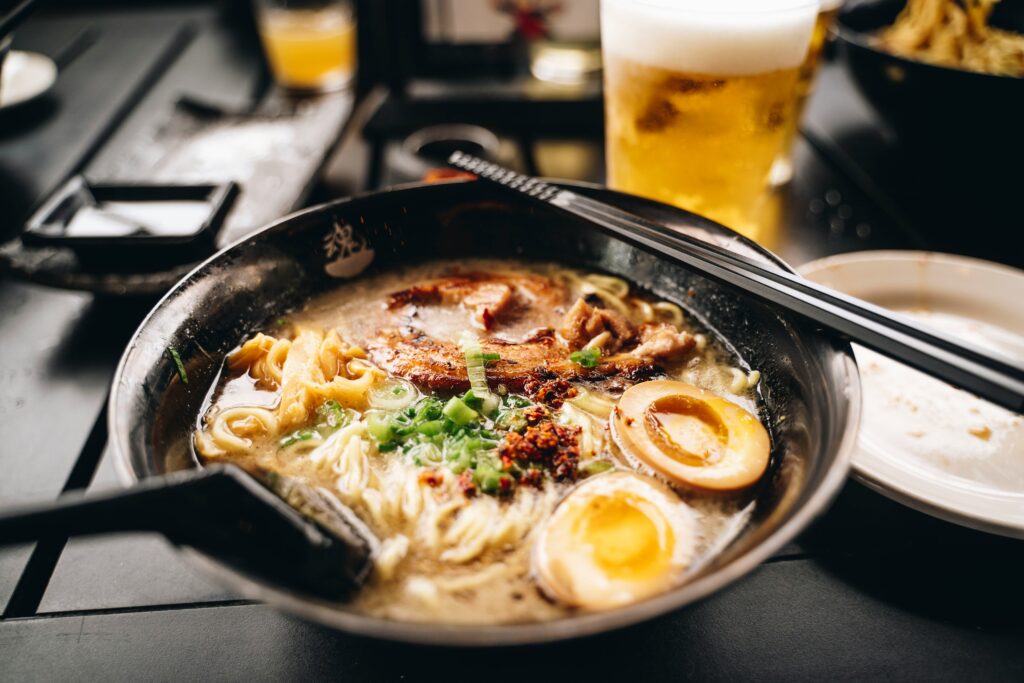
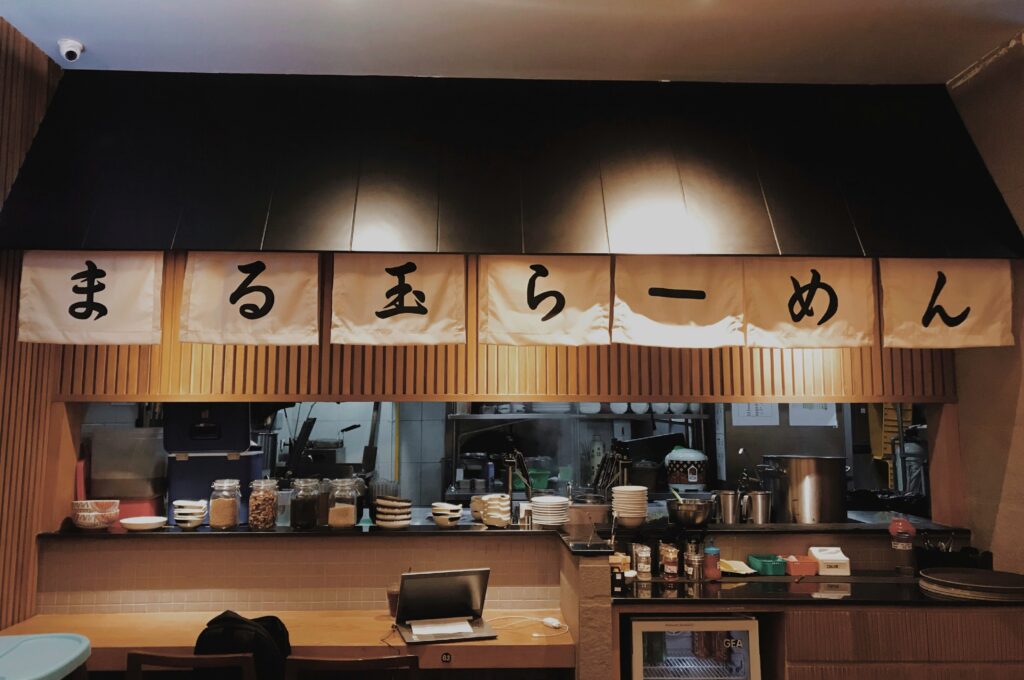
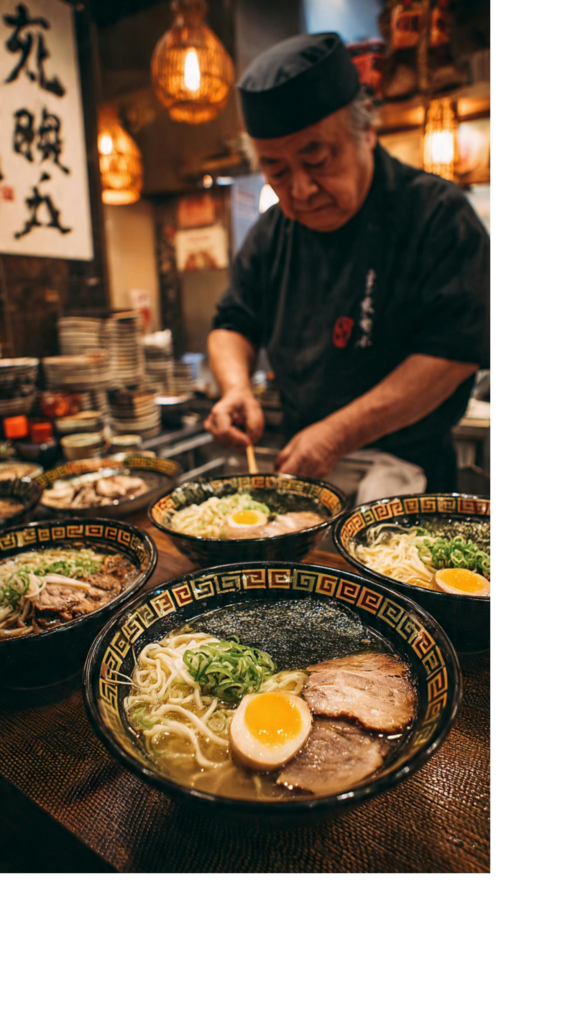
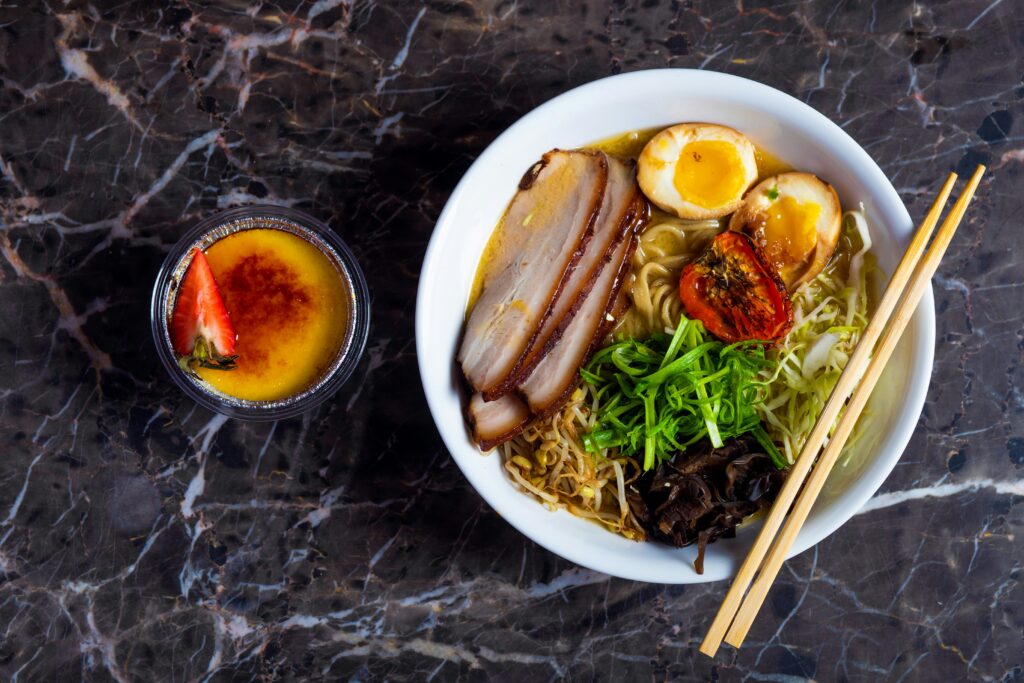
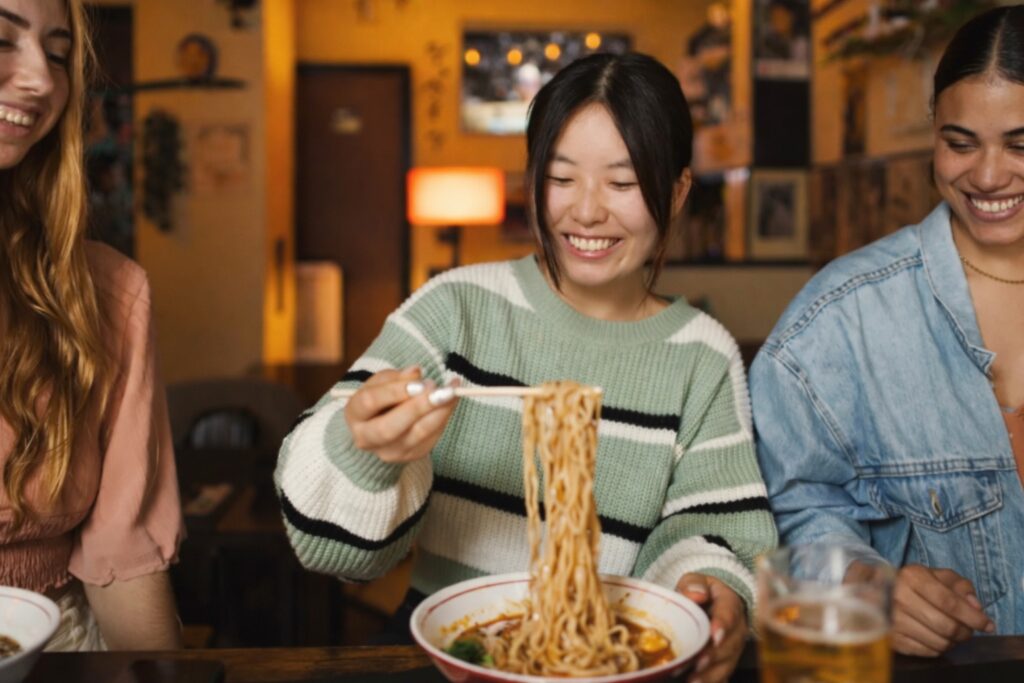
From simple street food to one of the world’s most loved dishes, this is the story of ramen.
From humble street food to global obsession, ramen may feel unmistakably Japanese today, but its roots lie across the sea — adapted from Chinese wheat noodles into the comfort food the world now loves.
Ramen’s Origins
Ramen arrived in Japan in the late 1800s, introduced by Chinese immigrants and traders. At the time, it was known as shina soba, meaning “Chinese noodles.”
Early ramen was simple and practical — wheat noodles in a clear broth, topped with small amounts of meat and green onion. It was filling, affordable, and ideal for workers, especially in busy port cities like Yokohama.
Ramen Becomes Japanese
After World War II, Japan faced severe food shortages. American aid brought large amounts of wheat flour, making noodles cheap and widely available.
Ramen stalls quickly spread across cities. Over time, cooks began adjusting broths, toppings, and seasonings based on local tastes. What started as borrowed food slowly became something uniquely Japanese.
This was the turning point — ramen stopped being just fast food and became regional cuisine.
The Birth of the Four Styles
As ramen spread across Japan, four main seasoning bases emerged. These became the pillars that still define ramen today.
Each style offered a different experience — from light and clean to rich and indulgent — allowing ramen to evolve into something deeply versatile.
The four styles are:
Shio – salt-based and light
Shoyu – soy sauce-based and savoury
Miso – fermented soybean paste, rich and hearty
Tonkotsu – pork bone broth, thick and creamy
These styles are why no two bowls of ramen ever feel the same.
Instant Ramen Changes Everything
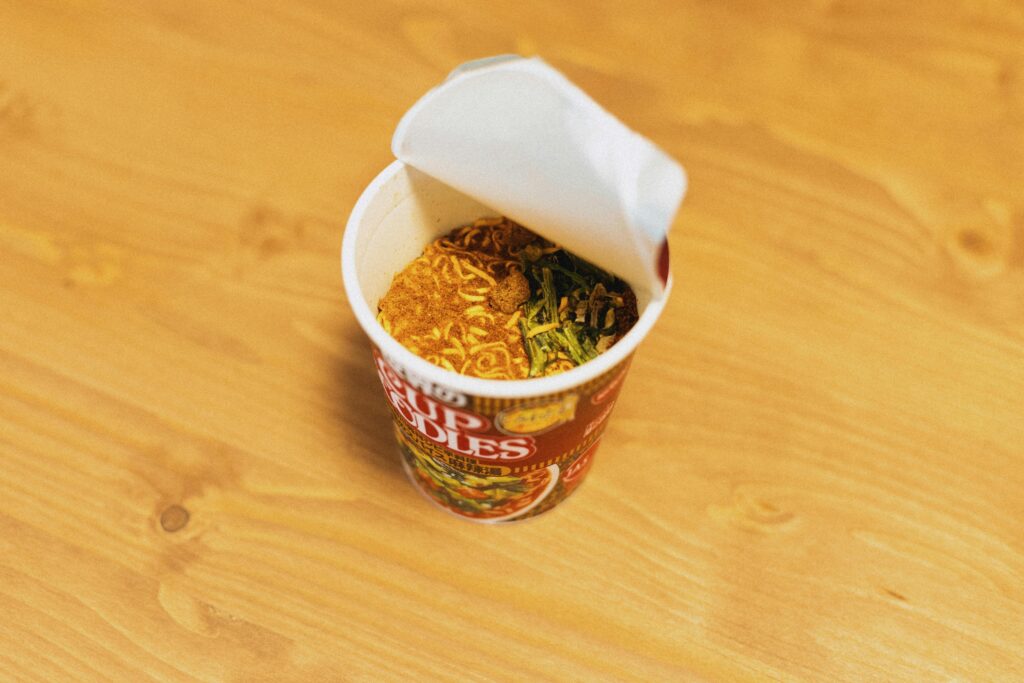
In 1958, Momofuku Ando invented instant ramen. This single invention transformed ramen from a street food into a global staple.
Suddenly, people around the world could experience something inspired by Japanese ramen — anytime, anywhere. Instant noodles made ramen one of the most consumed foods on Earth.
Ramen Today
Modern ramen has gone far beyond its beginnings. Chefs now slow-simmer broths for days, blend multiple stocks, design custom noodles, and layer flavours with the precision of fine dining.
Yet at its core, ramen remains unchanged — a bowl built on care, balance, and comfort.
Why Ramen Endures
Ramen lasts because it adapts.
It can be simple or
luxurious, Traditional or experimental.
Quick or slow.
Affordable or premium.
But it always delivers the same thing — a deeply satisfying bowl that feels both personal and universal.
"Every bowl has a history. Every style has a reason.”